 简体中文

Panel Laminating Equipment Accelerates Its Transition Toward Intelligent and Eco-Friendly Manufacturing, as Chinese-Made Production Lines Expand into Diverse Application Markets.
Panel Laminating Equipment Accelerates Its Shift Toward Intelligent, Eco-Friendly Manufacturing as Chinese Production Lines Expand into Diverse Applications
Recently, as markets for refrigerated truck bodies, cleanroom engineering, new energy industrial facilities, and prefabricated buildings continue to expand, demand for emerging composite panels—including SPC marine boards, stone honeycomb panels, GFK sandwich panels, and manually manufactured cleanroom panels
—has steadily increased. This growth is driving a new wave of technological innovation and market adjustment in upstream panel laminating equipment. The industry is shifting its focus from simply maximizing production speed toward precision adhesive control, stable pressing, flexible production capabilities, lower energy consumption, and digital process management. Meanwhile, the competitiveness of complete production lines manufactured in China continues to improve, and the structure of export orders is becoming increasingly sophisticated.
Panel laminating is a critical process in sandwich panel manufacturing. Glue application systems, hot and cold presses, and continuous laminating production lines form the core of the equipment portfolio. Traditional production lines commonly face challenges such as uneven adhesive application, adhesive waste, fluctuations in pressing pressure and temperature, and complicated adjustments when switching between panel specifications. These issues can lead to surface blistering, delamination, and inconsistent bonding strength.
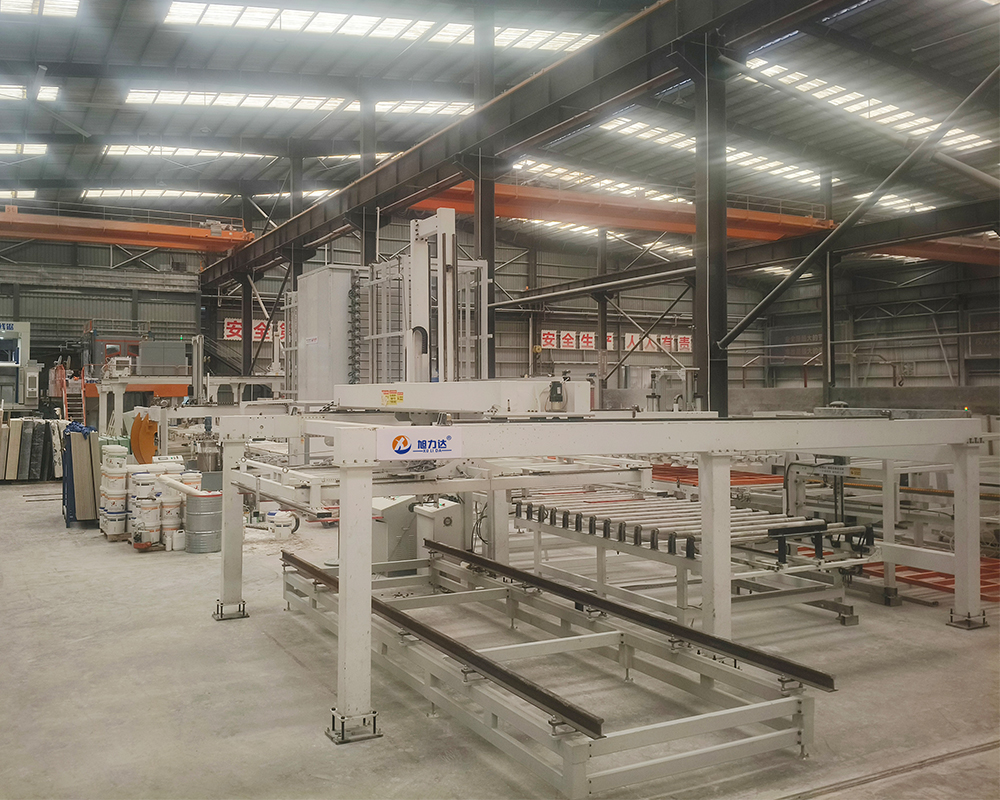
To address these challenges, domestic equipment manufacturers are continuously optimizing their core technologies. A new generation of fully automatic glue application machines features intelligent mixing-ratio management and closed-loop flow control systems. The glue application width can be adjusted automatically according to panel dimensions, while adhesive flow rate and mixing ratio are precisely controlled. Combined with imported static mixing tubes, these systems ensure uniform mixing of two-component adhesives, reduce excess and insufficient glue application, and significantly improve adhesive utilization.
Some cantilever-type glue application machines support 180-degree rotation, making them suitable for large panels, irregularly shaped panels, and sectional adhesive application on RV and refrigerated truck body panels. These machines combine automated mass production capabilities with the flexibility required for small-batch, customized orders.
Upgrades to integrated hot and cold presses and continuous laminating production lines have also become a major industry trend. New-generation presses adopt independently controlled temperature zones and synchronized hydraulic proportional pressurization technology, delivering more precise temperature regulation and more uniform pressure distribution. They allow manufacturers to switch between hot pressing for rapid curing and cold pressing for forming and consolidation, accommodating different adhesive processes, including PUR and epoxy adhesives. These systems can produce conventional insulated sandwich panels while also meeting the composite manufacturing requirements of specialized products such as fiberglass and stone honeycomb panels.
A complete production line integrates automatic loading, glue application, panel layup, pressing, curing, cutting, and conveying units. Equipped with a human-machine interface control system, it enables one-touch parameter selection, automatic fault diagnosis, and production data storage and traceability. The number of operators required per production line can be significantly reduced, lowering labor costs and improving product consistency. Many factories are upgrading from intermittent, standalone machine operations to continuous automated production lines.
Green manufacturing, low carbon emissions, and environmental compliance are key drivers of this round of equipment upgrades. Downstream panel manufacturers face increasingly stringent VOC emission control requirements, prompting equipment suppliers to optimize adhesive delivery, enclosed conveying, and exhaust collection systems. Low-emission PUR glue application solutions are being increasingly promoted as alternatives to certain higher-pollution adhesive bonding processes.
At the same time, energy-saving improvements are being implemented across production equipment. Thermal circulation air ducts, enhanced insulation structures, and variable-frequency drive modules are being widely adopted to reduce energy consumption per unit of output, supporting the building materials industry's energy conservation and carbon reduction objectives. Chinese-made integrated equipment with CE marking and ISO management system certifications is gaining wider recognition in overseas markets, including Southeast Asia, the Middle East, and Latin America. Export offerings are no longer limited to basic, entry-level machines; intelligent, integrated production lines are accounting for an increasing share of overseas orders.
Diversifying market demand is also raising expectations for flexible manufacturing capabilities. In the past, most laminating production lines were designed for a single purpose, with each line dedicated to one panel category. Today, customers increasingly expect a single equipment system to accommodate multiple products, including cleanroom panels, SIP structural panels, SMC door panels, and refrigerated truck body panels, while allowing rapid changes in panel thickness, core materials, and facing materials.
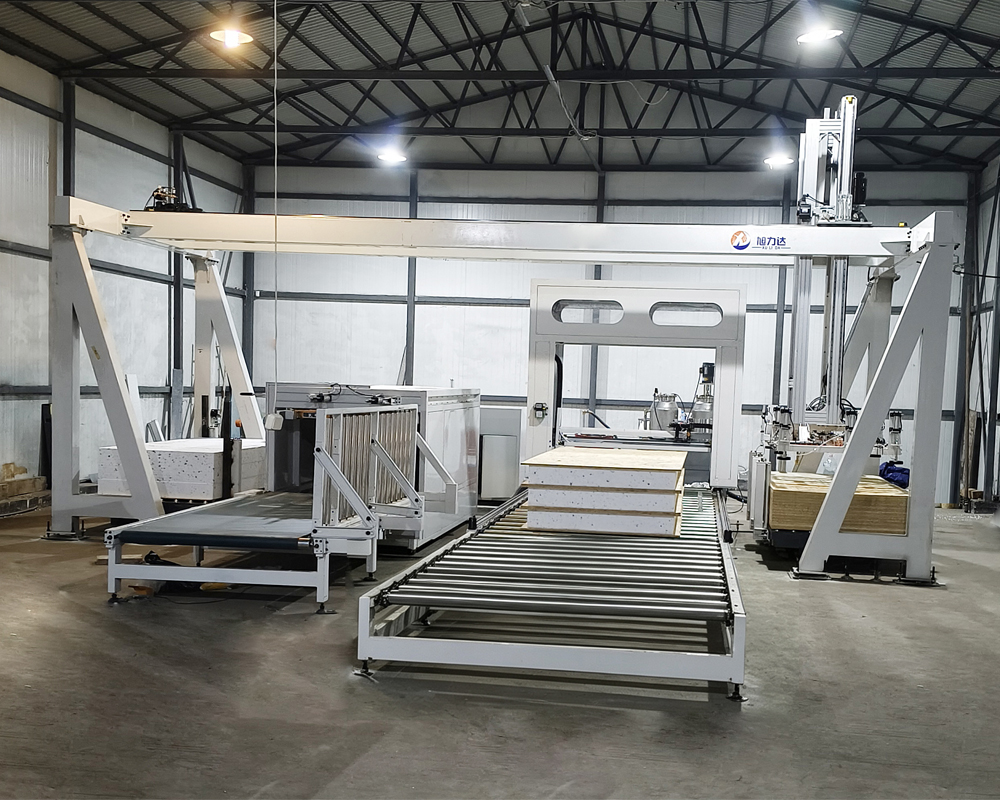
In response, equipment manufacturers are adopting modular design concepts. Glue application, pressing, and conveying units can be rapidly reconfigured, shortening changeover and commissioning times. This approach better supports the multi-product, small-batch order patterns common among small and medium-sized panel manufacturers.
Despite these growth opportunities, the industry faces several challenges. China has a large number of panel laminating equipment manufacturers, and intense competition among similar low-end models continues to put pressure on prices and research and development investment. Advanced technologies such as vision-based quality inspection and AI-powered online defect detection still have considerable room for improvement. The reliability of key components and the ability to provide long-term operation and maintenance services remain important factors differentiating equipment brands.
Industry experts note that competition in the panel laminating equipment sector will increasingly shift away from hardware alone toward comprehensive capabilities encompassing process engineering solutions, digital operation and maintenance, and full-lifecycle customer service.
Looking ahead, continued growth in prefabricated construction, cold-chain logistics, and new energy-related industries is expected to sustain demand for high-performance composite panels. To strengthen their competitive advantages and capture opportunities in both domestic industrial upgrading and global market expansion, Chinese equipment manufacturers must continue advancing adhesive control, hot-pressing technology, and automation integration. By connecting equipment, manufacturing processes, and material data, and by continuously refining flexible, eco-friendly, and intelligent integrated production solutions, they can further enhance the competitiveness of Chinese-made equipment in global markets.
 How Is the After-Sales Service of a Direct Manufacturer of C
 Glue Spraying vs. Roller Coating: Key Differences in Adhesiv
 What is the difference between a standalone fully automatic
 Panel Laminating Equipment Accelerates Its Transition Toward